
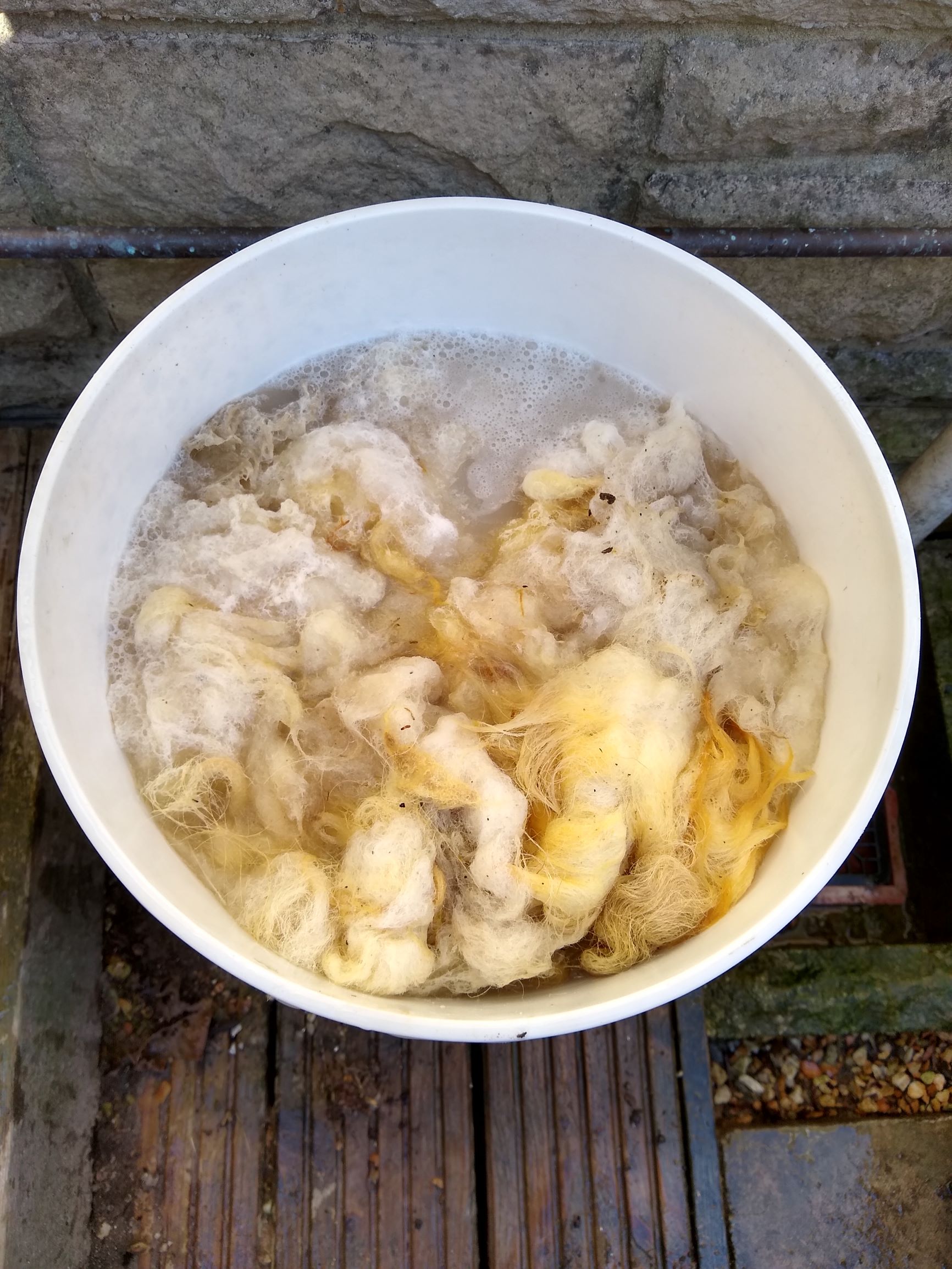
Wool is not difficult to wash and with the advent of modern wool wash cycles on washing machines it is easier than ever.
Let us remember that wool does not need much washing. Unlike artificial fibres, wool has a sort of self-cleaning system which means it rarely smells, except of sheep! Spot cleaning is a good way to remove the odd accident. I generally wash my jumpers once maybe twice a year. This saves you money and the planet, plus you are not releasing microplastics into the environment. A win-win-win situation!
There are a few considerations when it comes to washing wool.
- How to stop wool clothes from shrinking and felting.
- How to keep the fibres soft and scrummy
- How to dry your wool clothes without stretching them.
How to Stop Shrinking and Felting
Shrinking and felting is more likely to occur if you hand wash woollen clothes. Trust me I have done it too many times to mention. It is devastating, which is why I recommend using a washing machine. All my products have been through a wool wash at least once before I sell them.
Wool is a protein fibre. It does not cope with rapid changes in temperature. Think about your muscles (which are protein fibres to) and what happens if you jump into cold water or hot water. You tense up and that is what wool will do causing shrinking. When I am naturally dyeing I boil the wool. That’s right the wool is boiled! It was scary the first time I did this, but so long as the fibre is warmed and cooled slowly there is no problem.
Wool has little hooks on the surface. Some people make use of this when creating beautiful, felted products. The hooks become tangled with agitation, and this causes shrinkage and felting. I use this when fulling the fabrics after weaving. The fibres swell and felt into position creating a stronger more stable fabric. You don’t want this to happen with your woollen jumper though, so use that wool wash cycle! Over enthusiastic hand washing can easily cause felting and shrinkage.
How to keep fibres soft and scrummy.
This is easy. Most clothing detergents and conditioners are formulated for either plastic (polyester) clothes or cellulose fabric e.g. cotton or linen. This means they hate the protein of wool (or silk) and will cause damage to the fibres.
Use a wool specialist detergent and a hair conditioner. I use Ecover’s Wool and Silk detergent, as it is good for the planet as well. In the conditioner section of the washing machine or the final rinse, I add a small amount of hair conditioner. It doesn’t really matter what type, but your wool will really appreciate the care.
How to dry clothes without stretching them
Do NOT use a tumble dryer! This will cause the fibres to felt and the clothes to shrink (too much agitation again). You can hang somethings up on clothes dryers or the line. It will work well for straight flat items like scarves, but not for jumpers as they will stretch. Most knitted items will stretch if hung up. If you can find a place to dry clothes flat, if you can. I have been known to drape woollen clothes over a range of surfaces, as I run out of flat spaces. I also have some flat air dryers which work well.
If you have hand washed your clothing, please try not to wring it out. Lay it on a flat, dry towel and roll it up. You can then squeeze most of the water out.
DO NOT DRY CLEAN
Finally, if you have naturally dyed woollen clothes, please do NOT take them to the dry cleaner. It will destroy the colours completely. I know some shop bought woollen clothes say dry clean only, but please don’t dry clean my products they are not designed for it.
Leave a Reply